Tracked: The U.S. Population Trends by Race/Ethnicity
This post may contain affiliate links. If you use them, we may earn a commission at no extra cost to you. Please see our disclaimer page for more information.
Key Takeaways
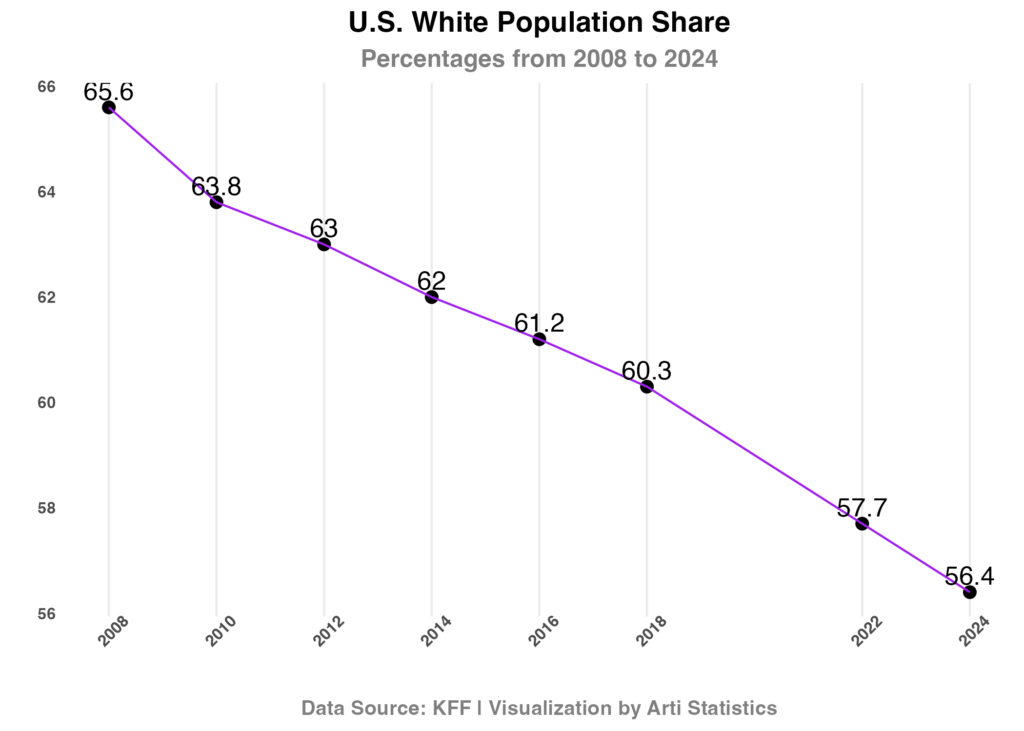
- The White population share declined by 9.2 percentage points, from 65.6% in 2008 to 56.4% in 2024
- Hispanic population grew the most, increasing by 4.6 percentage points (15.5% to 20.1%)
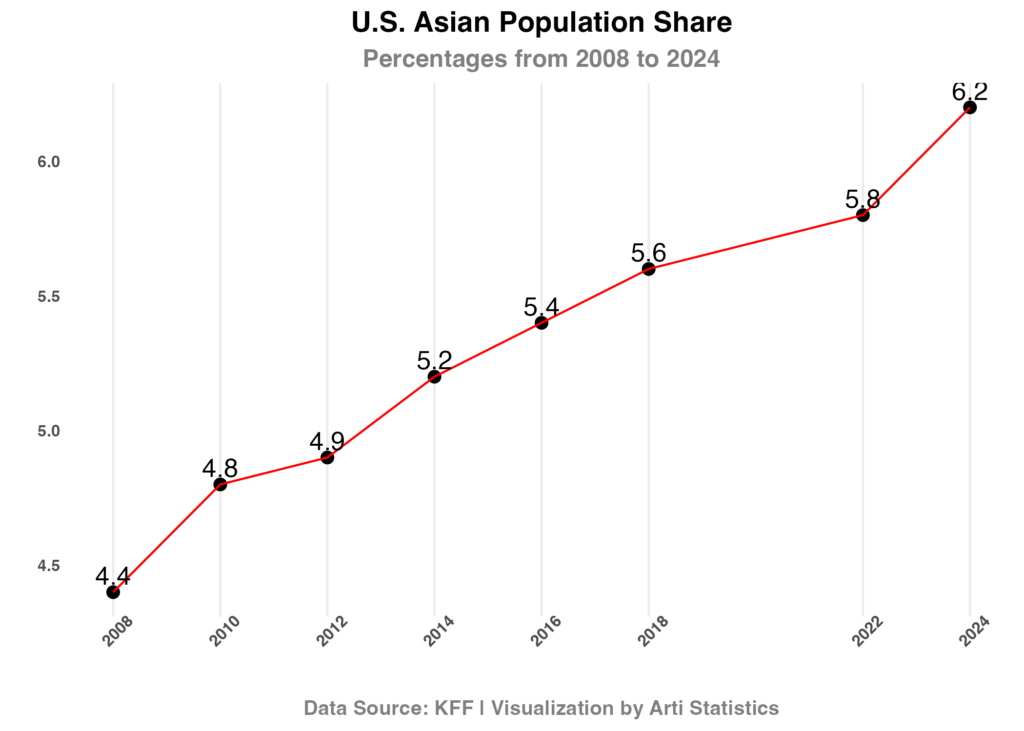
- Asian population share increased by 1.8 percentage points, from 4.4% to 6.2%
- Black population percentages remained remarkably stable, fluctuating only between 11.6% and 12.2%
- Data for 2020 was unavailable from the source and is therefore excluded from this analysis.
The most striking pattern is the steady, consistent decline in the White population share, averaging roughly 0.6 percentage points per year. There’s no indication of this trend slowing, as the trajectory appears linear and persistent.
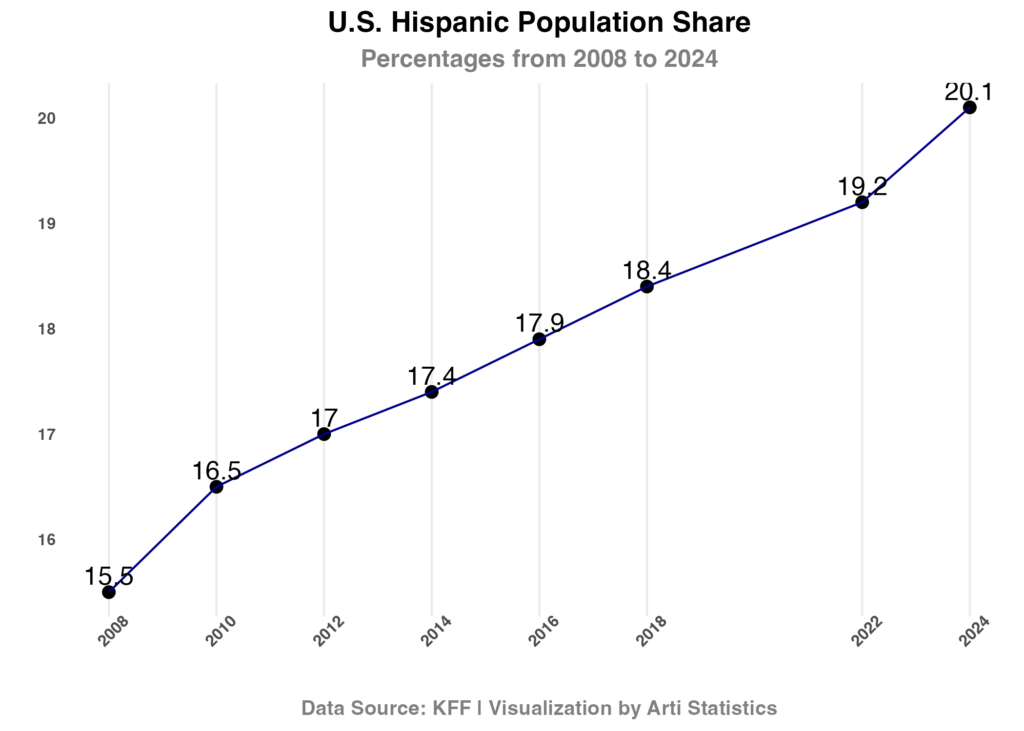
Hispanic population growth mirrors this decline almost proportionally, suggesting these two trends are directly related. The Hispanic share is now approaching one-fifth of the U.S. population, a milestone with significant cultural and political implications.
Asian population growth, while smaller in absolute terms, represents substantial proportional change, a 41% increase from the 2008 baseline. This reflects ongoing immigration patterns and demographic momentum.
The Black population percentage showed minimal variation between 2008 and 2024, remaining at approximately 12% of the population. This stability stands in contrast to the dynamic shifts occurring in other demographic categories.
With these, we are certain that the demographic composition of the United States is fundamentally transforming.
Data Source: Kaiser Family Foundation (KFF).