Worms in Salmon: Real Experiences and Advice
This post may contain affiliate links. If you use them, we may earn a commission at no extra cost to you. Please see our disclaimer page for more information.
We collected, processed, and reviewed 302 comments from a social media thread where someone found what looked like a worm in their cooked salmon. The responses came from real people sharing lived experiences, practical advice, and personal insights. Below, we provide you with he main points you should take away. This is not theory, but a reflection of real-life reactions and solutions people offered about dealing with worms in salmon.
Worms in Salmon: Normal?
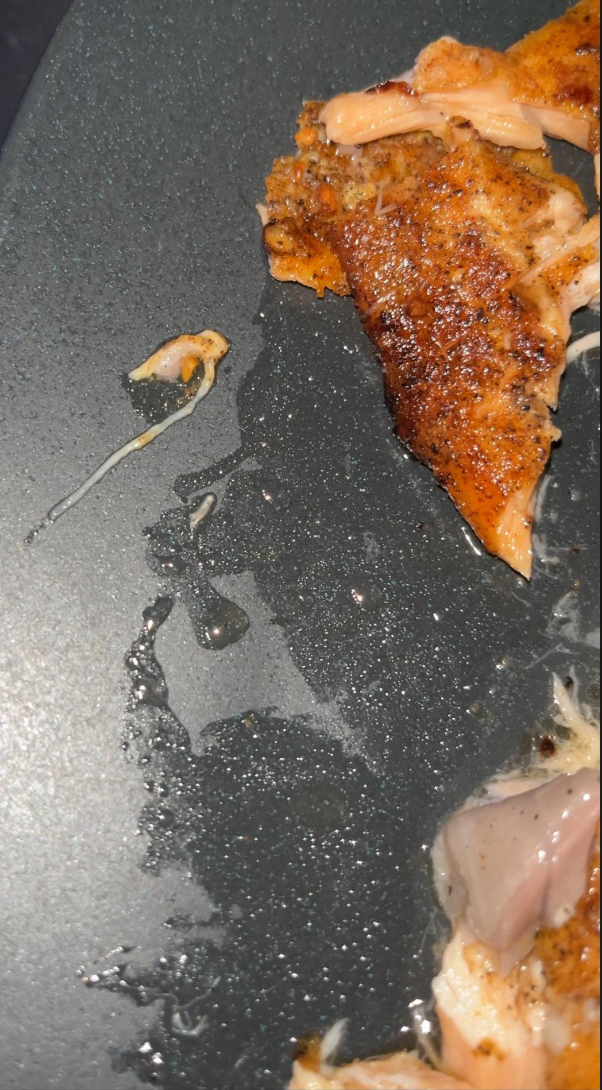
Commenters widely agreed that worms are very common in wild salmon and often go unnoticed, adding that many people have likely eaten them without harm. Some argued whether the OP’s photo showed an actual worm or just sinew, fat, or cartilage, but the consensus was that worms do occur frequently in salmon and are not unusual.
Cooking and Freezing
The most repeated point was that worms in salmon are harmless if the fish is properly cooked or commercially frozen. Cooking to an internal temperature of 145°F (63°C) reliably kills parasites, though some prefer slightly lower temperatures like 135°F for better flavor if held longer. Nearly all salmon sold in stores is flash frozen, which also kills parasites, making it safe even for raw consumption in sushi. Truly fresh, never-frozen salmon is rare and usually found only at fishmongers or directly from fishermen.
Using Thermometers
It was fully discussed that using a probe thermometer is more important than oven settings. High-end tools like the Thermapen were praised for accuracy, while others said cheaper thermometers work fine if calibrated. In the OP’s case, baking at 450°F for 20 minutes, the worms would certainly be dead, though several noted this method likely overcooked the fish. Alternative methods such as searing first and finishing at a lower temperature were suggested to avoid dryness.
Farmed or Wild Salmon?
Some pointed out that worms are more common in wild-caught salmon compared to farmed fish, though others said sustainability depends more on responsible fisheries than on whether fish is farmed or wild. The broader agreement was that worms are natural in wild salmon but not dangerous when frozen or cooked correctly.
Mixed Reactions
Reactions split between those who dismissed worms as harmless “extra protein” and those who were disgusted, with some swearing off salmon altogether or avoiding cheap supermarket sources. Several recommended buying from trusted places like local fishmongers, Asian markets, or Costco for higher quality and peace of mind.
Final Takeaway
Worms in salmon are normal and expected, especially in wild-caught fish. They pose no danger if the salmon has been cooked to a safe internal temperature or commercially frozen. While unsettling to see, they are part of eating fish, and with proper handling, salmon can be safe and enjoyable to eat. However, avoiding it completely maximizes the chances that a parasite inside of a salmon would end up in your body.
For more insights, comments, or requests for a custom quantitative or qualitative research, do not hesitate to reach out to our team.