Are Deaths from Cancer Decreasing in the US? The Case of Black Populations
This post may contain affiliate links. If you use them, we may earn a commission at no extra cost to you. Please see our disclaimer page for more information.
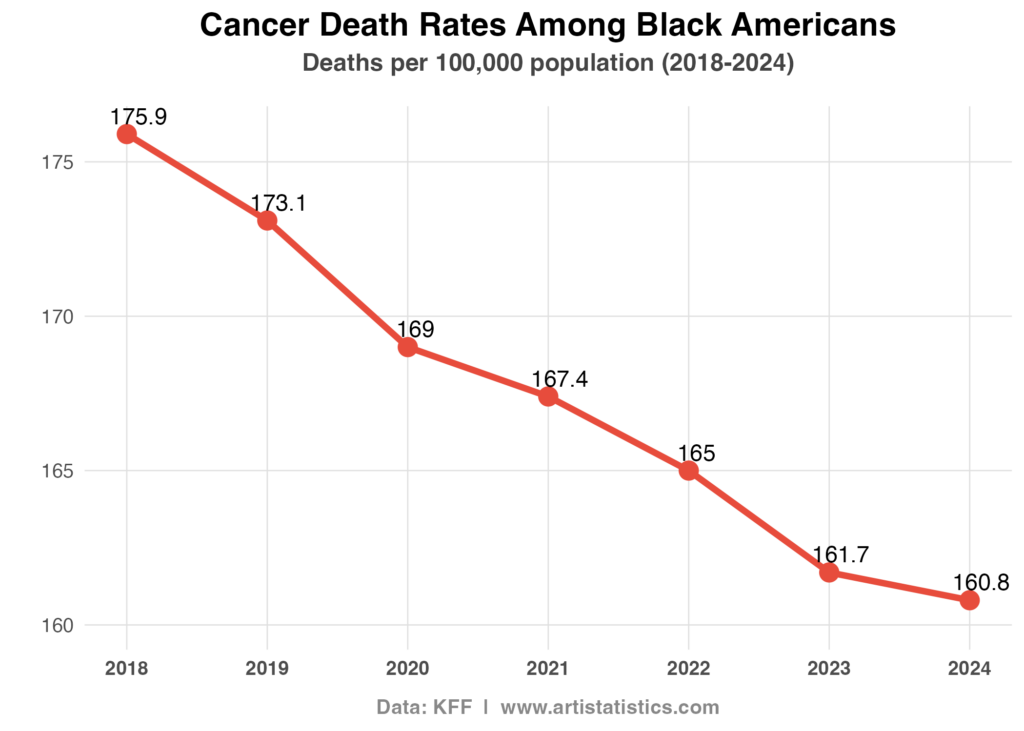
Deaths from cancer among Black Americans has declined significantly from 2018 to 2024, dropping from 175.9 deaths per 100,000 population to 160.8, a decrease of 8.6% over six years.
Key Takeaways
- Cancer death rates fell 8.6% from 2018 to 2024, declining from 175.9 to 160.8 per 100,000
- The steepest decline occurred between 2019-2020, dropping 4.1 points during the pandemic period
- Despite improvements, Black Americans still experience the highest cancer mortality rates among all racial groups
- Progress has been consistent, death rates decreased every year except 2021, which saw a slight uptick
The steady downward trend reflects improvements in cancer screening access, treatment advances, and targeted public health interventions addressing health disparities. Early detection programs, particularly for colorectal and breast cancers, have expanded in underserved communities, catching more cases at treatable stages.
However, context matters: while Black cancer death rates decreased 8.6% since 2018, they remain substantially higher than other groups. In 2024, Black Americans experienced cancer mortality 9.4% higher than White Americans (160.8 vs 147.0), 57% higher than Hispanic Americans, and 91% higher than Asian Americans.
This persistent gap reflects multiple systemic factors: delayed diagnoses due to healthcare access barriers, higher prevalence of aggressive cancer subtypes, socioeconomic factors affecting treatment quality, and historical medical mistrust reducing screening participation. Geographic disparities also play a role, Black Americans in rural areas and the South face particularly elevated mortality rates due to limited oncology services and insurance coverage gaps.
The decline is encouraging, but closing the racial mortality gap requires continued investment in community health centers, culturally competent care, insurance expansion, and research into biological factors that may contribute to different cancer outcomes across populations.
Data Source: Kaiser Family Foundation (KFF) (2024)