What State Has the Lowest Property Tax Rate?
This post may contain affiliate links. If you use them, we may earn a commission at no extra cost to you. Please see our disclaimer page for more information.
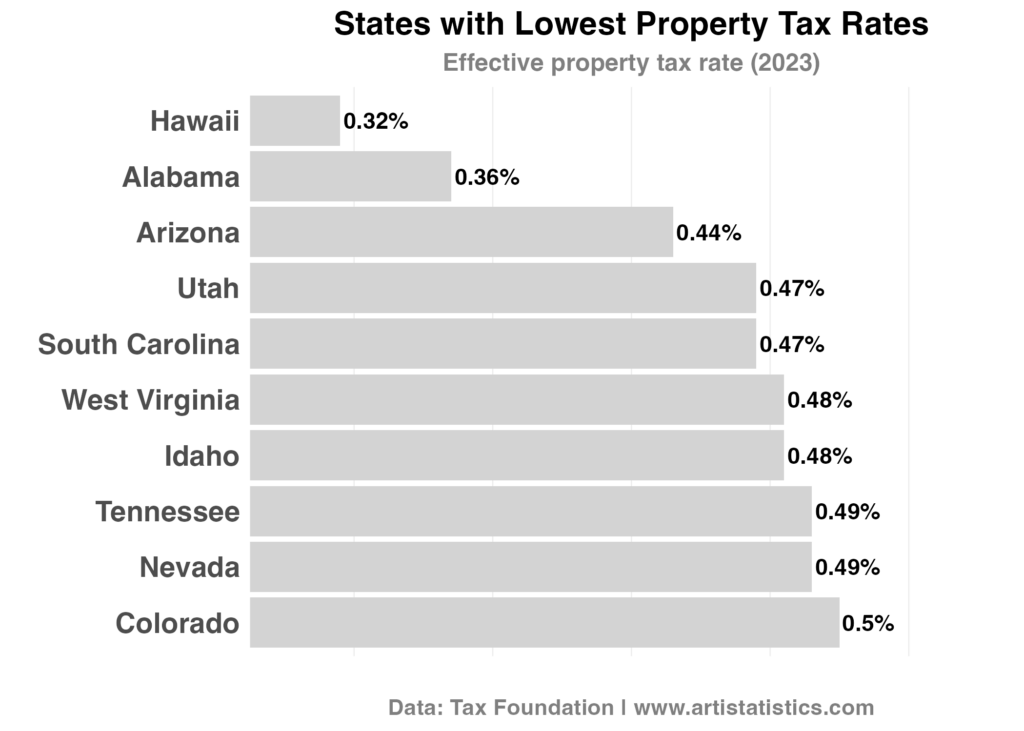
Property taxes are a major homeownership cost, but some states with the lowest property tax rates keep this burden remarkably low, offering big savings for homeowners, retirees, and investors.
Key Takeaways
Looking at stateds with lowest property tax rates, we found:
- Hawaii maintains the nation’s lowest property tax rate, offering exceptional savings for homeowners.
- Southern and Western states dominate the rankings, reflecting regional tax policy preferences.
- All ten states keep effective property tax rates below half a percent.
- Geographic clustering suggests coordinated approaches to revenue generation across neighboring states.
Regional Tax Philosophy
The concentration of Southern states among the lowest property tax jurisdictions reflects a broader regional approach to taxation. States like Alabama, South Carolina, and Tennessee have historically favored minimal property tax burdens, instead relying on consumption-based taxes and user fees to fund government operations.
Western states in this ranking take a different path to the same outcome. Hawaii leverages tourism revenue to reduce resident tax burdens. Nevada supplements low property taxes with gaming industry revenues. Colorado and Utah combine efficient government operations with diverse revenue streams from natural resources and economic growth. These states demonstrate that low property taxes don’t require sacrificing all public services, just creative revenue diversification.
The presence of Idaho, West Virginia, and Arizona in this group shows that low property tax states span different economic profiles. From resource-rich mountain states to retirement destinations to manufacturing centers, these jurisdictions prove that minimal property taxation can coexist with various economic models.
What Drives the Difference
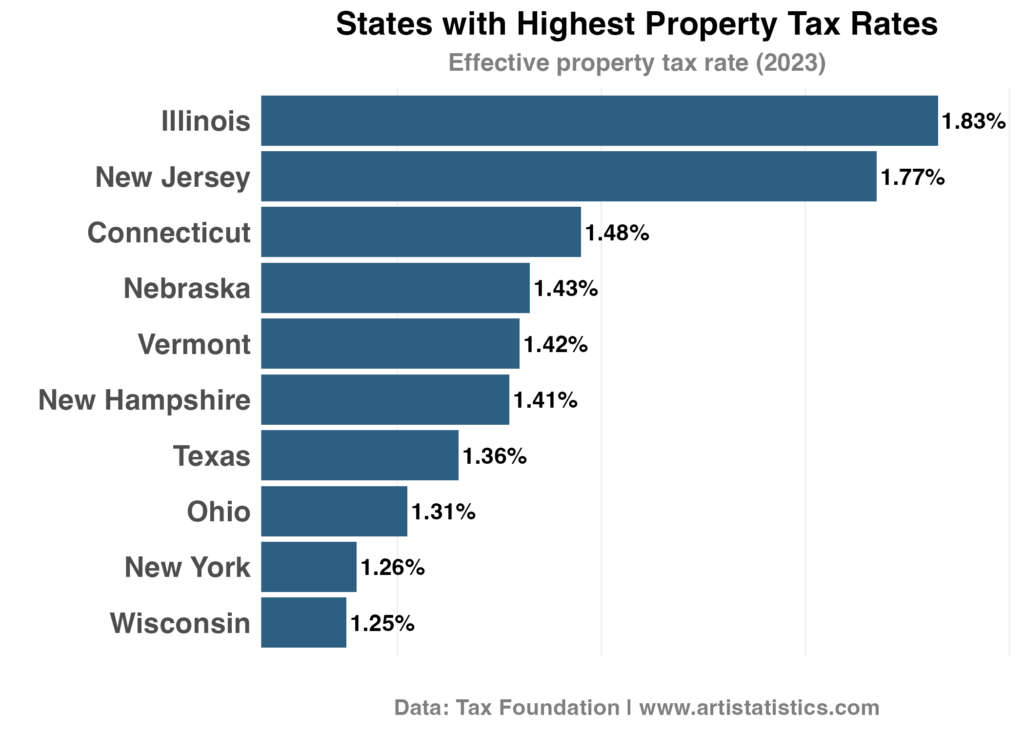
States with lowest property tax rates typically share common characteristics: alternative revenue sources that reduce reliance on property taxation, constitutional or statutory limits on tax rate increases, strong property rights traditions that resist taxation expansion, and political cultures that prioritize tax minimization. Hawaii’s tourism economy generates billions that offset resident tax needs. Tennessee and Nevada eliminate state income taxes but keep property taxes minimal through sales tax reliance. Utah’s young, growing population creates tax revenue from economic activity rather than static property values.
Strategic Considerations
Low property tax states appeal most strongly to specific groups. Retirees benefit from predictable, minimal housing costs on fixed incomes. High-value property owners see savings that scale with home prices. Real estate investors enjoy improved cash flow and investment returns.
However, understanding the full tax picture matters. Some low property tax states offset with higher sales taxes, income taxes, or fees for services. The lowest property tax rate doesn’t always mean the lowest overall tax burden, but it does provide certainty, unlike income or sales taxes that fluctuate with economic activity, property taxes remain predictable and controllable through housing choices.
Data Source: Tax Foundation (2025)